Telurin benchtop bioreactor: graphite control tower with green light strips and a screen, connected by a cable arc to a glass vessel full of amber broth

The bioreactor with a process engineer built in.

A benchtop bioreactor, 1–10 L, that watches every run, records every change and helps you work out what happened. So the next experiment starts from data, not from a hunch.

It proposes. You decide.

Book a live demo30 minutes: the hardware, the interface and the agent, running.

Most bioreactors control a run. Very few help you understand it.

Day four of a fed-batch. Something drifted overnight. By morning the curve looks different and nobody saw it happen: you have pH and temperature, not what changed, when, or who touched it.

Dissolved oxygen · day 4 Example data
NIGHT · NOBODY IN THE LAB0255075100DO %18:0000:0006:0012:0018:0002:30 · ? nothing in the record02:20 · feed 12 → 20 mL/h02:34 · DO low alarm

08:30, first look. The curve fell at 02:30 and nothing in the record says why. The day starts with a guess.

  1. Feed rate 12 → 20 mL/h · changed by the night operator · reason: “ramp step 3”
  2. Dissolved oxygen below 30 % · low-DO alarm, on the record
  3. You start from the cause, not from a guess.

It's the same story when a process that worked at the bench behaves differently at the next scale: without a record, the meeting ends with opinions, not answers.

The complete Telurin unit: tower with screen, pumps, bottles, cable arc and glass vessel
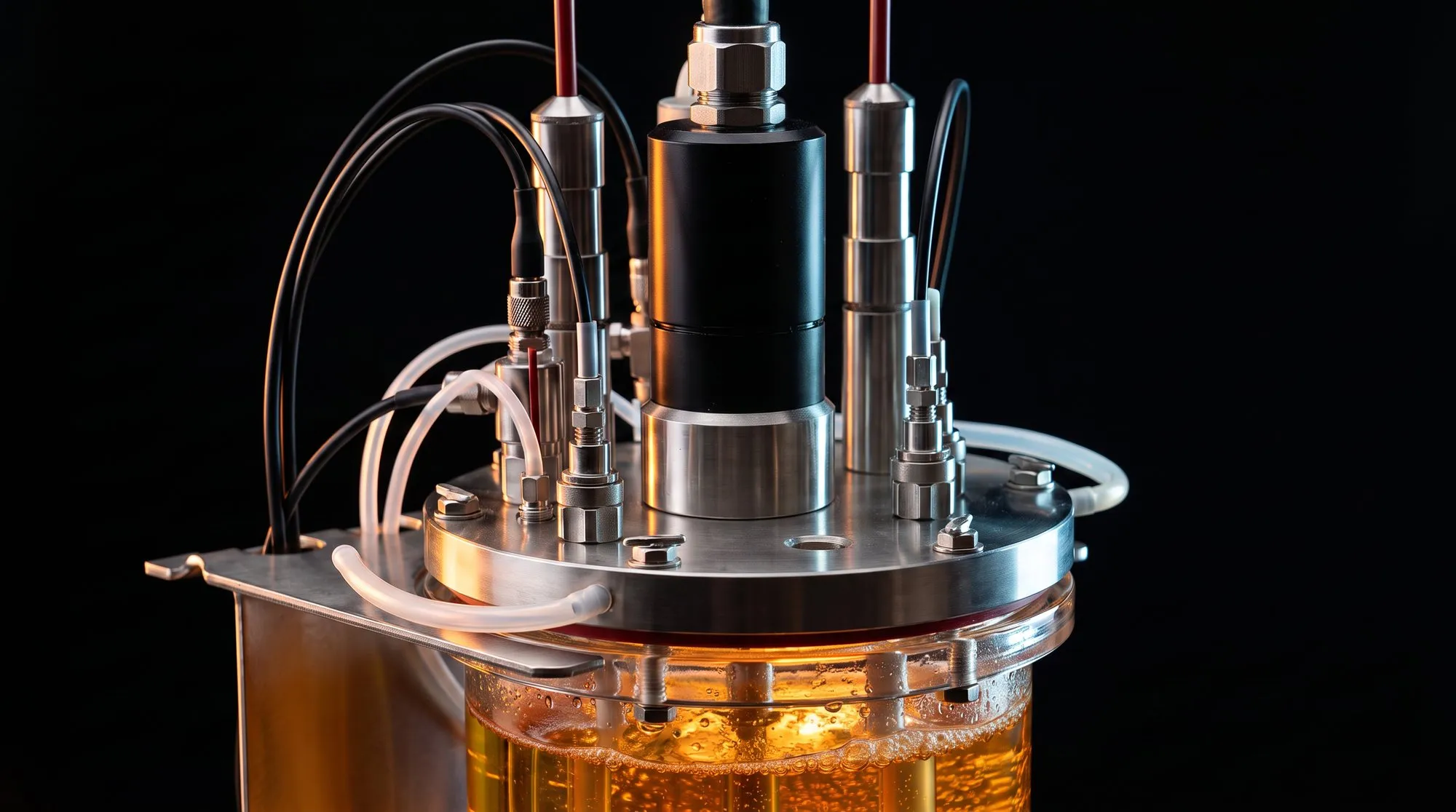
Close-up of the stainless headplate: probes, feed lines and the motor cable entering the top of the drive
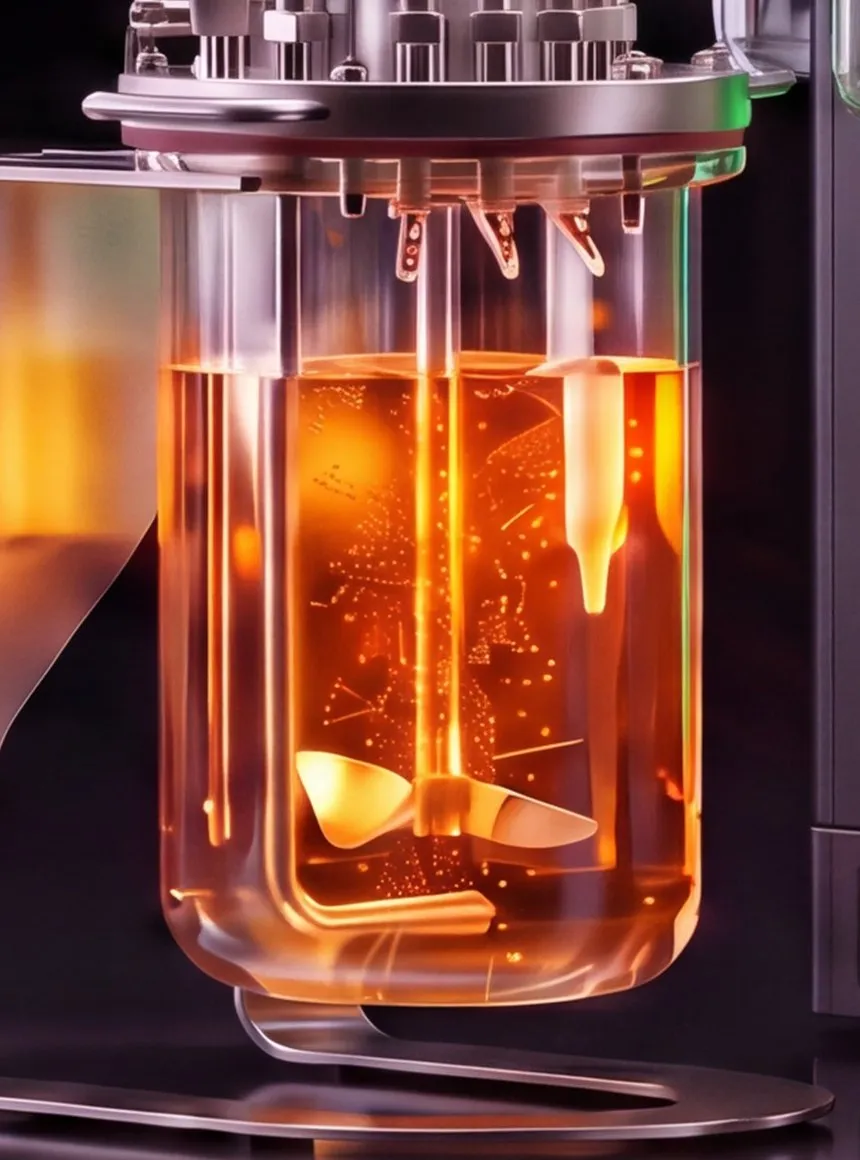
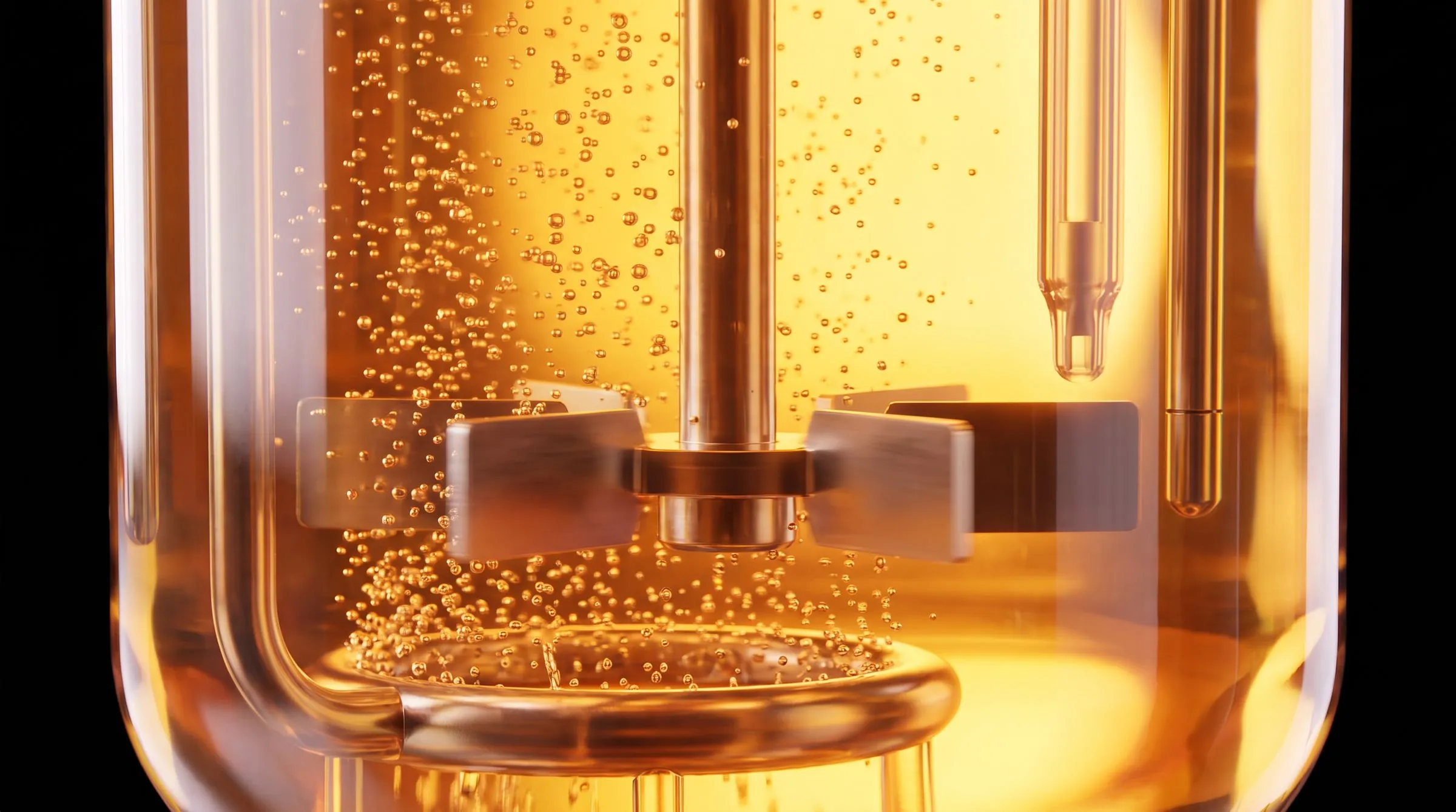
Inside the vessel: amber broth, fine bubbles and impellers on the shaft
The hardware

One benchtop unit. Everything a fermentation needs.

Vessel, probes, pumps and interface in one connected unit. Scroll to take it apart.
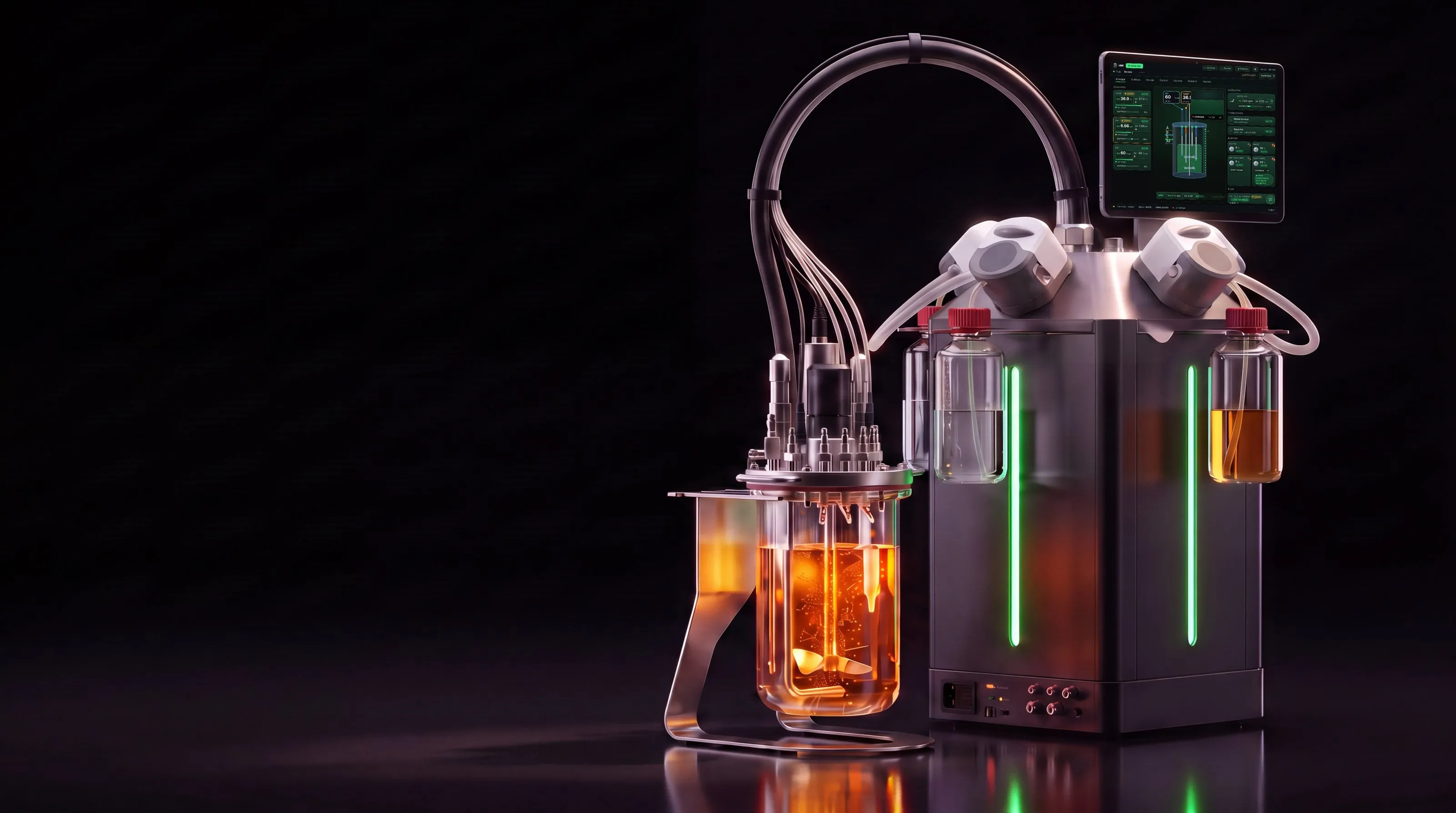
01 · The vessel

1–10 L of glass and steel.

A borosilicate vessel on a stainless stand. A heating blanket and a cold finger hold the temperature; a brushless drive turns the impellers.

02 · Probes and the arc

Every probe on the lid. Every line in one arc.

Digital pH and dissolved-oxygen probes and a PT100 sit on the headplate. The motor cable plugs in on top of the drive; probe cables and feed lines travel with it from the tower.

03 · Pumps and bottles

Four pumps. Four bottles. One path to the lid.

Acid, base, feed and antifoam. Each silicone line rises from its bottle, runs through its own peristaltic pump and follows the arc into the vessel.

04 · Inside the tower

Weighed, not guessed.

A load cell for gravimetric feeding and mass balance. Air and oxygen through mass flow controllers. The control loops run here, at the bench.

05 · On the reactor

The interface lives on the tower.

A screen on the reactor, and the same interface on your laptop, tablet or phone, in the lab or at home.

06 · Inside the run

This is what the agent reads.

Every reading, every change, on the record. From here, the agent takes over.

It watches every run. It proposes. You decide.

  1. Before
    Plan it properly.

    Set up the run with the agent: objective, variables, what you expect to see. It keeps that context for the rest of the run.

  2. During
    Someone is always watching.

    The agent reads the live state of the reactor and flags what's drifting, with an explanation you can check against the data. At 3 a.m. too.

  3. After
    Understand what happened.

    Ask about the run in plain language. Get the plots, the events and the changes in one place, and a record of the batch you can hand to someone else.
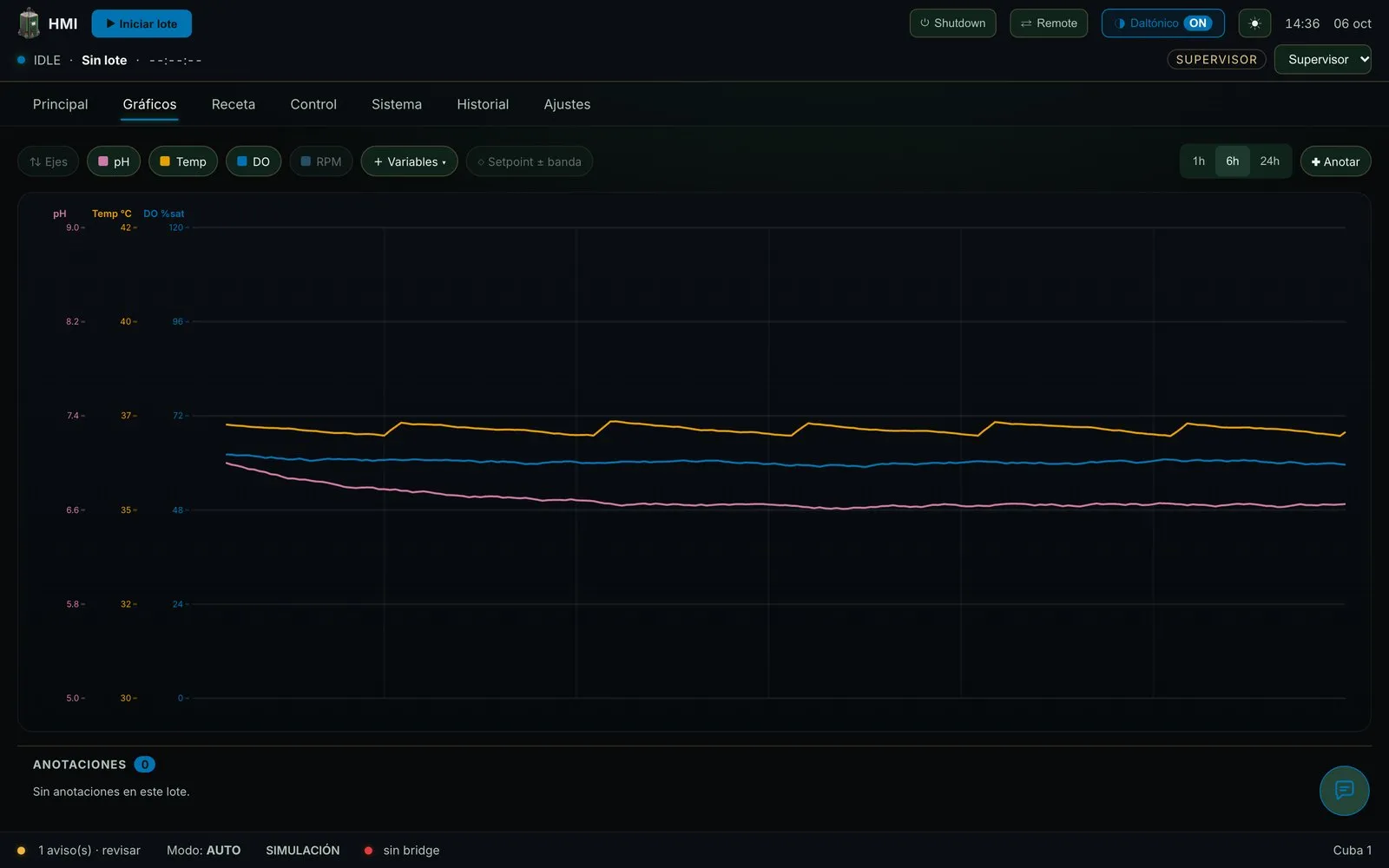
Trends on a laptop: pH, temperature and dissolved oxygen over the run, with a legend for each line
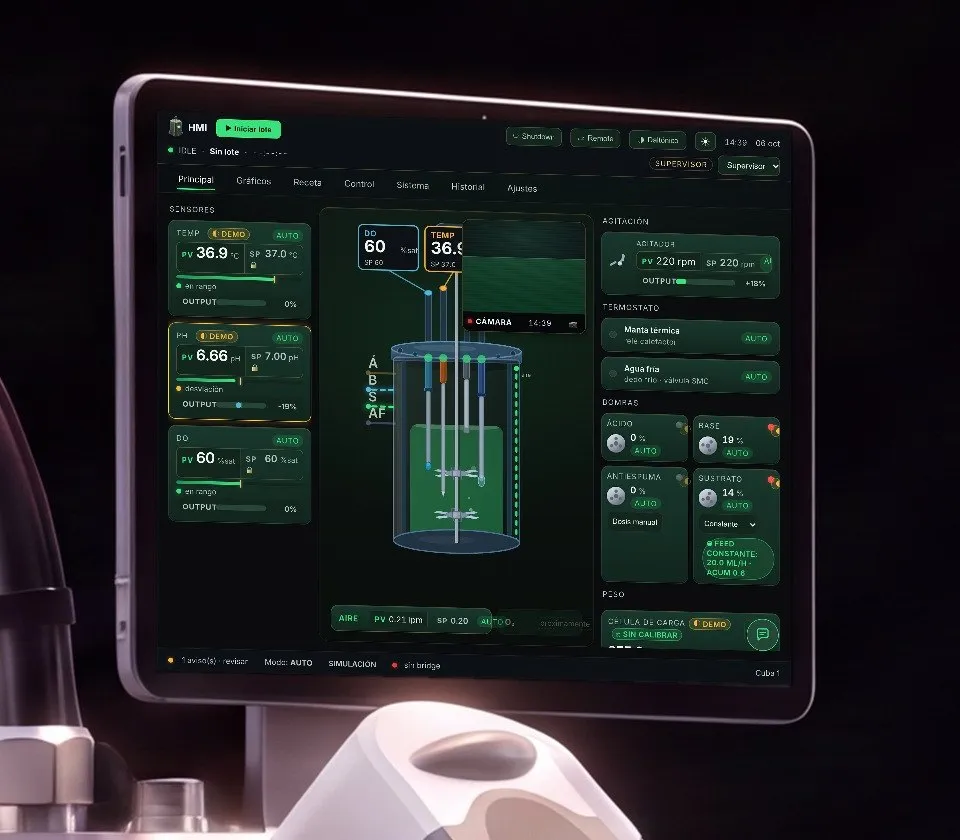
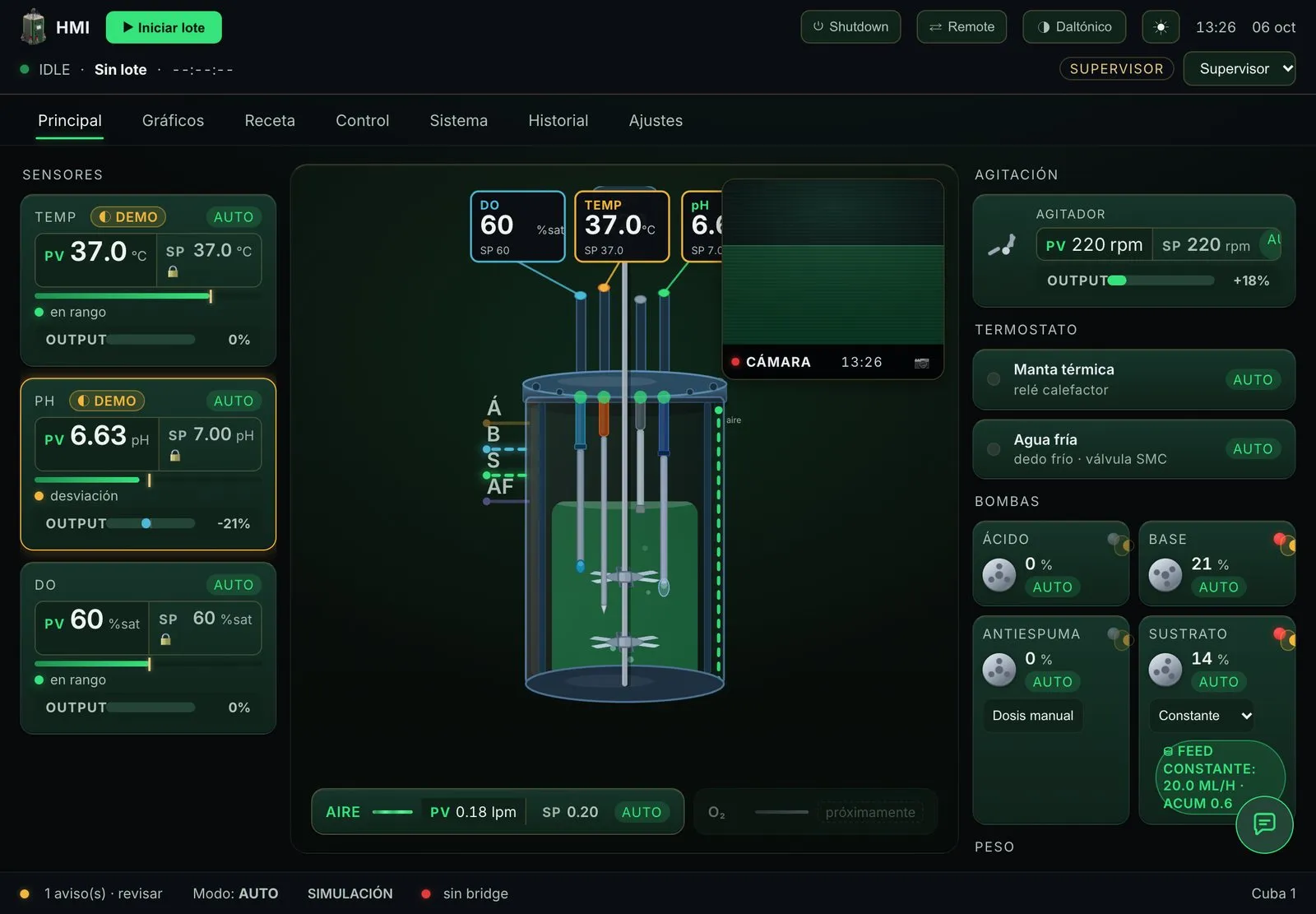
Main view on a tablet: live readings, setpoints, pumps and agitation
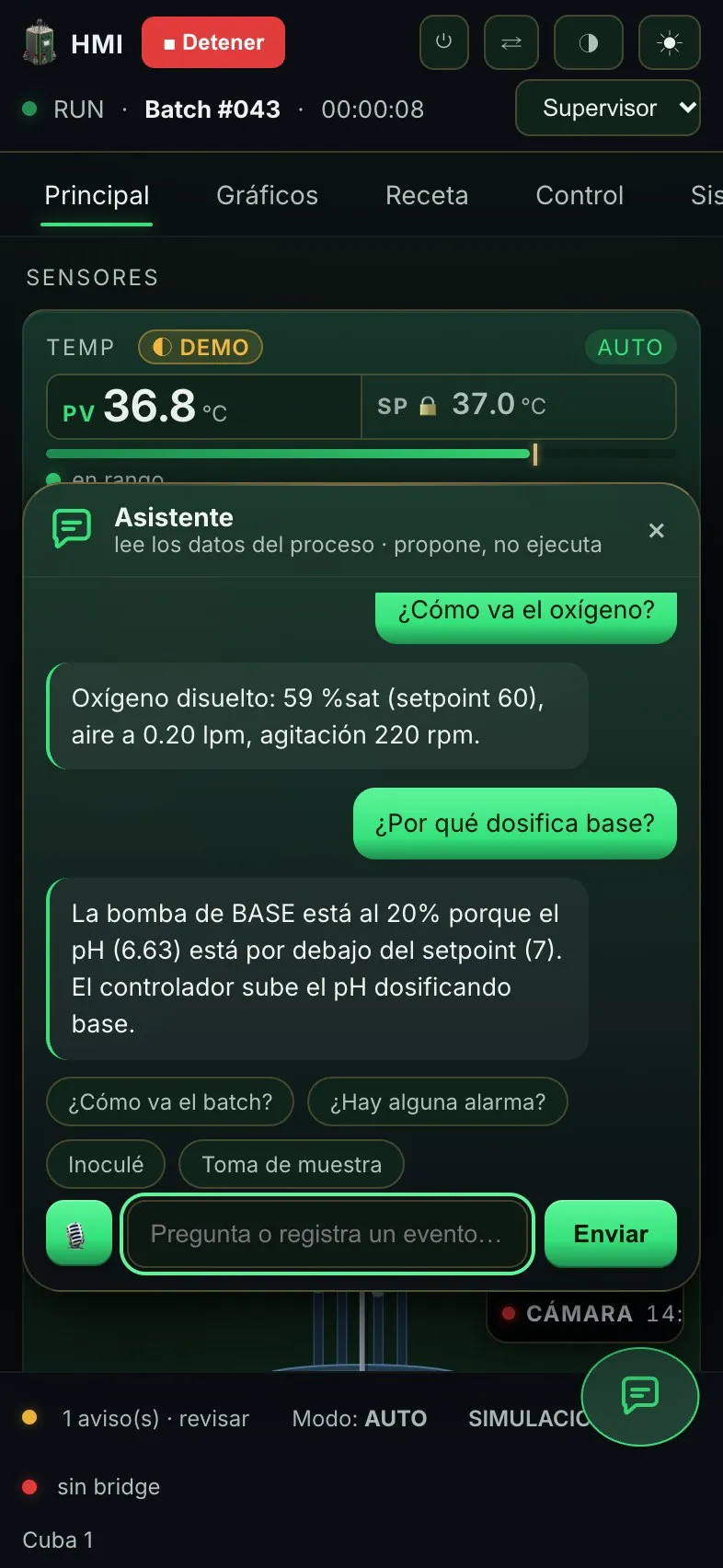
The assistant on a phone answering: dissolved oxygen 59 % against a setpoint of 60; the base pump is at 20 % because pH 6.63 is below its setpoint of 7

On your phone, wherever you are. The assistant reads the live run and explains it. It doesn't touch the reactor.

Yes, “AI in bioprocessing” sounds like hype. Here's what ours does and doesn't do.

  • It never changes your process on its own.It proposes a setpoint, a step, an experiment. A person approves it.
  • Everything it suggests is on the record.What it proposed, who accepted it, when and why.
  • It doesn't replace your technician.It replaces the alarm nobody sees at night and the afternoon spent copying data into a spreadsheet.
  • Control stays at the bench.The reactor runs its loops locally. If the network goes down, the run doesn't.
Interface

One interface. Every screen in your lab.

It runs in the browser: on the reactor's own screen, a laptop, a tablet or your phone, in the lab or at home. A training mode with a simulated reactor lets you learn without risking a run.
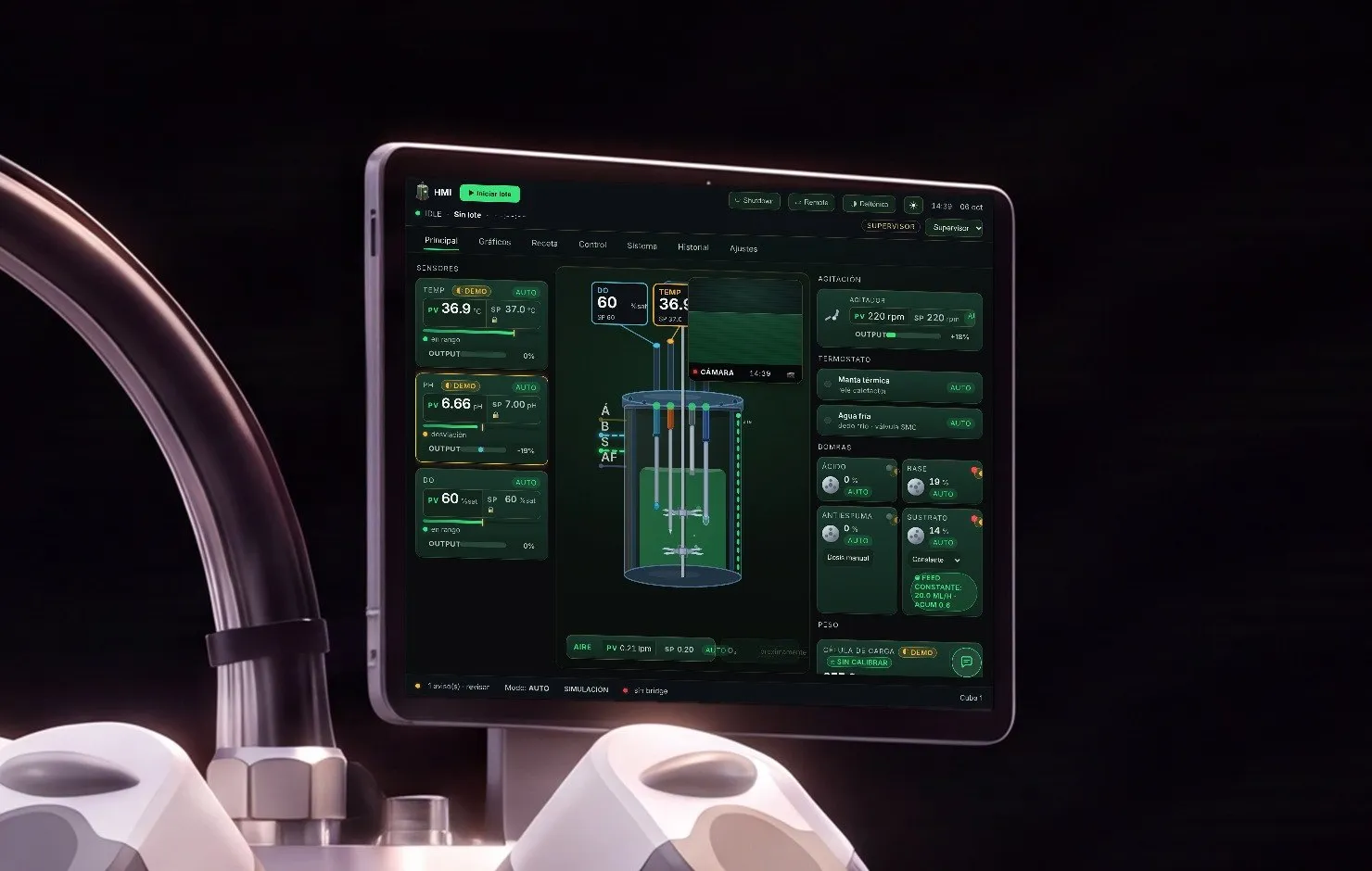
The interface on the screen mounted on the reactor tower, above the pump heads
On the reactorAnd right where the work happens.
  • Live

    Readings, setpoints and every actuator at a glance, with the state of each loop.

  • Trends

    pH, temperature and dissolved oxygen over the whole run, with your annotations on the curve.

  • Recipes

    Phases with entry conditions: the run moves on when the culture is ready, not when the clock says so.

Specifications

Tech specs.

Ask for the spec sheet
Measures
  • pH · industrial digital probe
  • Dissolved oxygen · industrial digital probe
  • Temperature · PT100
  • Weight · load cell, for gravimetric feeding and mass balance
Acts
  • Four peristaltic pumps · acid, base, feed, antifoam
  • Heating blanket and cold finger
  • Gas through mass flow controllers · air and oxygen
  • Agitation · brushless drive
Runs on
  • A browser interface · on the reactor's screen, or on your laptop, tablet or phone, in the lab or at home
  • A training mode with a simulated reactor · to learn and test without risking a run
Working volume
  • 1–10 L range
Built to be trusted

The safety and traceability most benchtop systems leave out.

  • SafetyEmergency stop

    Puts every pump, heater and valve in a safe state. Anyone can press it.

  • SafetyWatchdog in the controller

    If the computer stops responding, the reactor stops pumping and heating by itself.

  • DataAudit trail that can't be quietly edited

    Append-only and chained: who changed what, old and new value, result and reason.

  • DataUsers and roles

    Operators run, supervisors change setpoints.

  • DataYour data, exportable

    Every run, every variable, every event, as CSV.

Designed with the data integrity expected in regulated environments in mind.

Team

When you call, you talk to the people who designed it.

  • Dani CantónProcess & softwareLinkedIn

    Bioprocess engineer. Has taken fermentation processes from the lab to GMP plants, led full-plant site acceptance tests (one of them in Canada), designed a single-use bioreactor from scratch and led the integration of AI into bioreactor control.

  • Damián LemaProcess & start-upLinkedIn

    Fifteen years at the bench and in the plant. Has started up a GMP pilot plant and run upstream from 3 L to 200 L, with bacteria and plant cells. Makes sure the reactor arrives tuned, not as a three-week project.

  • Albert OlivaMechanical designLinkedIn

    Mechanical engineer with a background in pharmaceutical equipment and bioreactor design. Designs out the failures he's already seen in the field.

Who it's for

Built for teams developing a fermentation process that has to work at the next scale.

A good fit if you

  • develop microbial fermentation processes at bench scale
  • need to understand, not just control, what happens in each run
  • want every change on record, ready to share with your team, your investors or your QA

Not the right fit (yet) if you

  • need a GMP-certified system for production today
  • run mammalian cell culture that needs CO₂ for pH control
Questions

Questions you're probably asking

You're a new company. Why should I trust you?

The company is new. Our time in the plant isn't. Book a demo and judge the equipment and the people for yourself.

Will the AI change my process without asking?

No. It proposes; a person approves. Every suggestion and every decision is logged.

What happens if the network goes down?

The run continues. Control lives in the reactor, not in the cloud.

Can I check on a run from home?

Yes. Readings, alarms and the assistant are on your phone wherever you are. Control stays at the bench: the reactor runs its loops locally.

Can I use it in a regulated environment?

It's designed with data integrity in mind: roles, an audit trail that can't be quietly edited, full export. It isn't a validated GMP system out of the box. Tell us what your QA needs and we'll tell you honestly how close we are.

How much does it cost?

It depends on configuration. We'll give you a figure on the first call.

Book a demo

See it run.

  1. 1Pick a slot.30 minutes, online.
  2. 2Tell us about your process.Organism, scale, what's been hard so far.
  3. 3Watch it live.The hardware, the interface and the agent.
  4. 4Get a straight answer.Whether it fits your process, and if not, why.

Suppliers & partners

We source vessels, heating, probes, pumps and drive components from a small number of manufacturers we work closely with. Quotations, samples and new components: [email protected]